
Buzz’N Bees
Structural HoneyBee Removal
BUZZ’N BEES • STRUCTURAL REMOVAL SERVICES
Structural HoneyBee Removal
Practical help when honey bees, wasps or hornets establish themselves in walls, soffits, rooflines, sheds and other accessible parts of a structure.
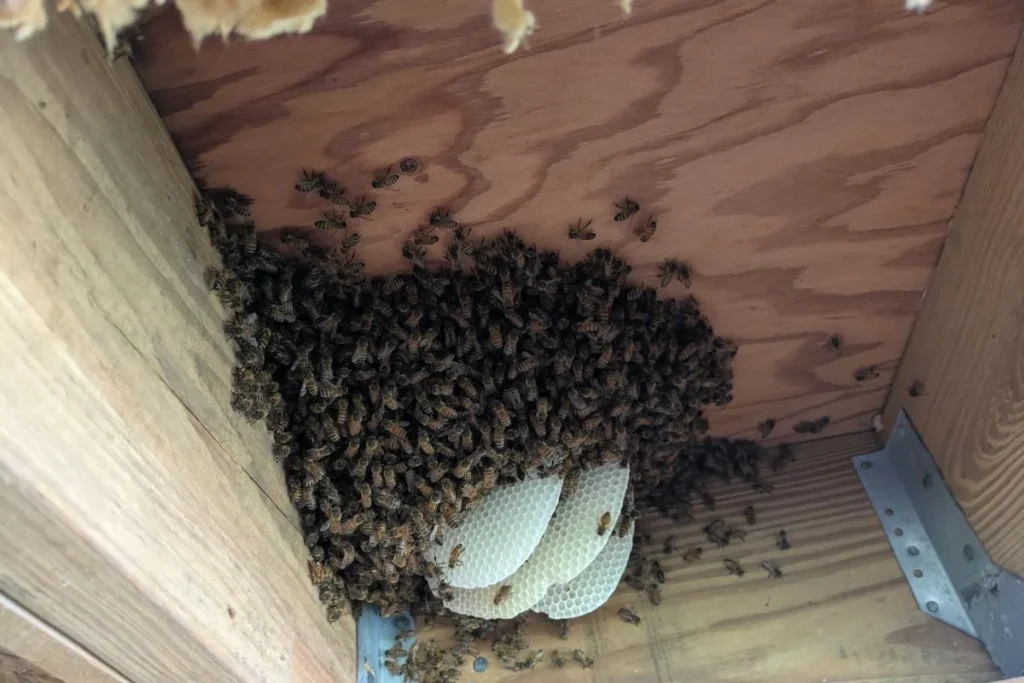
When bees move into the building
A colony inside a wall, roof, soffit or other cavity is different from a simple swarm hanging from a tree. The insects may be entering through a small exterior opening while the actual nest or honey-bee colony is hidden farther inside the structure.
Buzz’N Bees offers assessment and removal assistance where the colony or nest can be reached safely and realistically with the equipment available for the job. Every structural removal is different, so access, height, colony size and the amount of building material that may need to be opened are considered before work begins.
Honey Bee Removal
When practical, the goal is to remove the honey-bee colony, including accessible comb, brood and stored honey, and relocate the bees into managed beekeeping equipment rather than simply destroy the colony.
- Locate the main entrance and likely colony position
- Assess safe access to the cavity
- Open the area only where necessary and agreed upon
- Remove accessible bees, comb, brood and honey
- Relocate viable honey bees when practical
- Discuss closure and repair needs after removal
Wasp & Hornet Assistance
Accessible wasp and hornet nests can also be assessed for removal. The approach depends on the species, nest location, height, access and whether the work can be completed safely without specialized treatment.
- Exposed or hanging nests
- Accessible nests in sheds and outbuildings
- Accessible soffit, wall or roofline entry points
- Case-by-case assessment before work begins
- Referral may be recommended for inaccessible or pesticide-dependent work
How a structural removal normally works
01
Send the details
Send your location, where the insects are entering, how high the opening is and any photos or video you can safely capture.
02
Assessment
The site and access are assessed to determine what can realistically be done and whether another trade or specialist may be needed.
03
Removal plan
Before work begins, the proposed access point, expected scope and known limitations are discussed with the property owner.
04
Removal & follow-up
The accessible colony or nest is removed, and the owner is advised about sealing entry points and any final repair work still required.
What we may be able to access
Common locations include wall cavities, soffits, fascia areas, roof edges, sheds, garages, decks and other outbuildings. Elevated work is accepted only when the location can be reached safely with the equipment available for that particular job.
If reaching the colony would require major roofing work, extensive demolition, specialty lifts, hazardous access or work outside the practical scope of Buzz’N Bees, we will explain that before proceeding and may recommend another contractor or specialist.
Why removing the whole honey-bee colony matters
A honey-bee colony in a building can contain bees, brood, wax comb, pollen and stored honey. Removing only the flying bees may leave much of that material inside the cavity. When the colony is accessible, a more complete removal allows the cavity to be cleaned out as thoroughly as the structure permits before entry points are sealed.
Access, repairs and service limits
- Structural access: Some removals require siding, soffit, trim, drywall or other material to be opened. The proposed access is discussed before work begins.
- Final repairs: Buzz’N Bees is providing bee/wasp removal assistance, not general contracting. Permanent roofing, carpentry, drywall or other building repairs may need to be completed by the property owner or a qualified contractor unless specifically agreed otherwise.
- Safety first: Jobs that cannot be reached safely with available equipment will not be attempted.
- Pesticide-dependent work: Ontario regulates pesticide use in extermination work. If a wasp, hornet or bee problem requires treatment outside the scope of our service, referral to an appropriately licensed pest-control professional may be recommended.
- No two jobs are identical: A site assessment is required before the final scope and price can be confirmed.
What affects the cost?
Structural removals are priced case by case because the amount of work can vary dramatically. Important factors include travel distance, height, access, colony or nest size, how long the insects have been established, whether building material must be opened, and how much comb or nest material must be removed.
Photos are helpful for an initial discussion, but a final price may require an on-site assessment.
Before contacting us
If you can do so safely, send clear photos or a short video showing the exterior entry point and the surrounding area. Do not open walls, block the entrance, spray the insects or climb into an unsafe location just to get a better picture.
- Your town or general location
- Whether you believe they are honey bees, wasps or hornets
- Where they are entering the structure
- Approximate height from the ground
- How long the activity has been noticed
- Any safe photos or video of the entrance area
Have bees or wasps living in your structure?
Send us the location and a few safe photos. We’ll review what you are seeing and determine whether the job appears to be within our practical service range.